Emergence
May 29 @ 10:00 am – July 25 @ 4:00 pm
Averi Boerboom, Trinity Davis, Rain Doody, Carly Johnson, Clifford Jasper Ozee, Stevie Poling, and Maya Taki
Topham Brown Gallery
May 29 – July 25, 2026
Opening Reception: May 28 from 6 to 8 pm
For over two decades, the Vernon Public Art Gallery’s annual Emergence exhibition has been developed in close collaboration with the University of British Columbia Okanagan, offering a first professional platform for a selection of graduating BFA and BMS students. More than a showcase, Emergence has come to function as a kind of barometer—an early signal of the material, conceptual, and aesthetic directions shaping the next wave of contemporary practice.
The 2026 exhibition features work by Averi Boerboom, Trinity Davis, Rain Doody, Carly Johnson, Clifford Jasper Ozee, Stevie Poling, and Maya Taki—seven artists whose practices reflect both the diversity and urgency of this year’s graduating cohort.
This year’s work is notably ambitious. Across disciplines, it is large, loud, and unapologetically present. Installation-based practices dominate, with artists constructing immersive environments that invite viewers not just to observe, but to enter—worlds built through accumulation, texture, and spatial awareness. Sculpture and painting also play a significant role, foregrounding process and the visible trace of the artist’s hand. In a moment increasingly defined by the rise of artificial intelligence and digital production, these works insist on labour, material presence, and embodied making.
What emerges across these practices is a shared investment in the deeply personal. Whether grappling with memory and loss, the fading textures of childhood, queer identity, inherited histories, or the instability of perception, each artist engages with what it means to be human in a rapidly shifting cultural landscape. From Boerboom’s tender meditations on memory and Alzheimer’s, to Doody’s embrace of the grotesque and imperfect, to Taki’s negotiation of mixed heritage through material and form, the works collectively resist detachment in favour of vulnerability and specificity.
If Emergence offers a glimpse of what is to come, then the future of contemporary art is not quiet or minimal—it is expansive, materially grounded, and insistently human.
Averi Boerboom
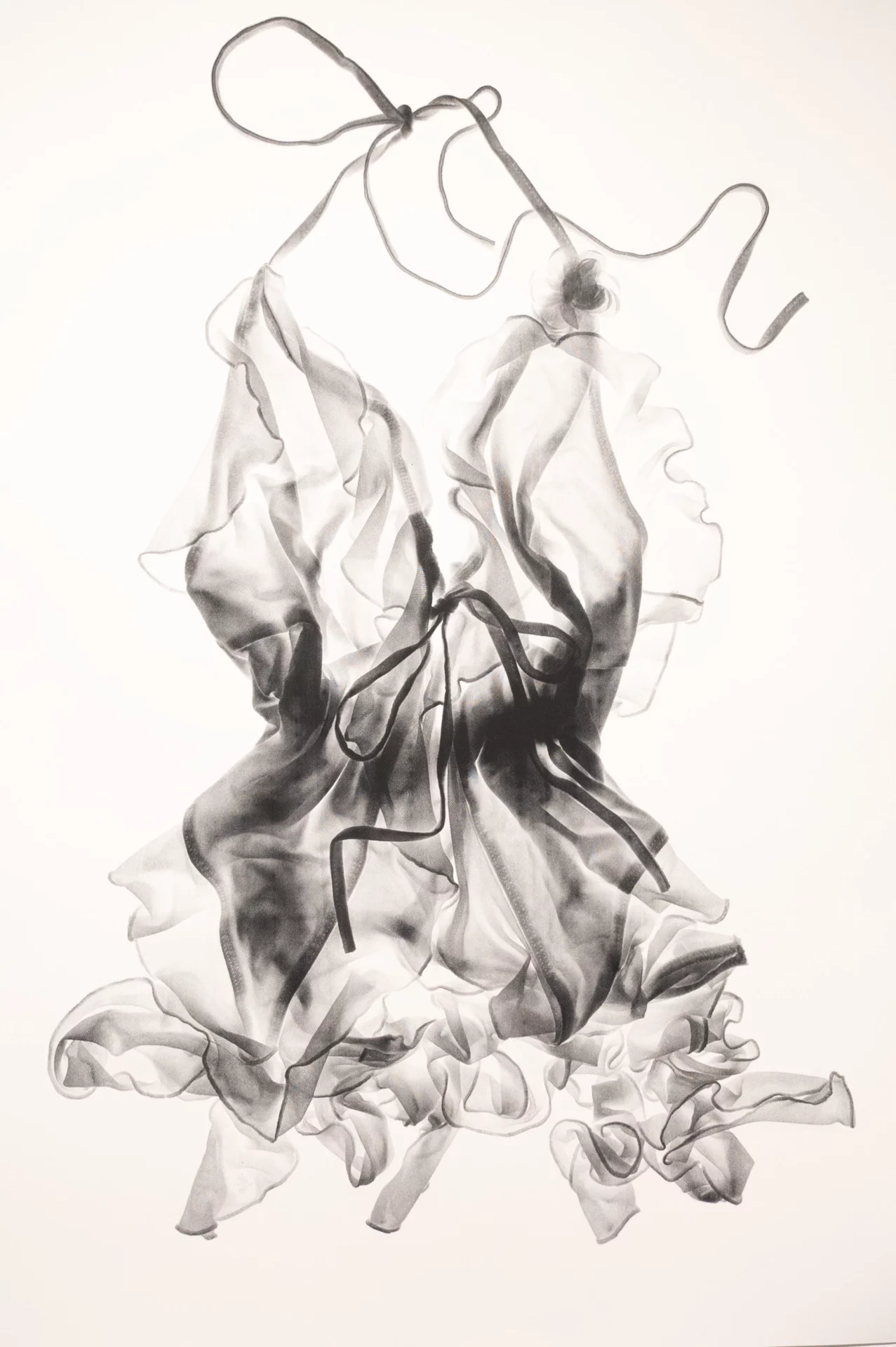
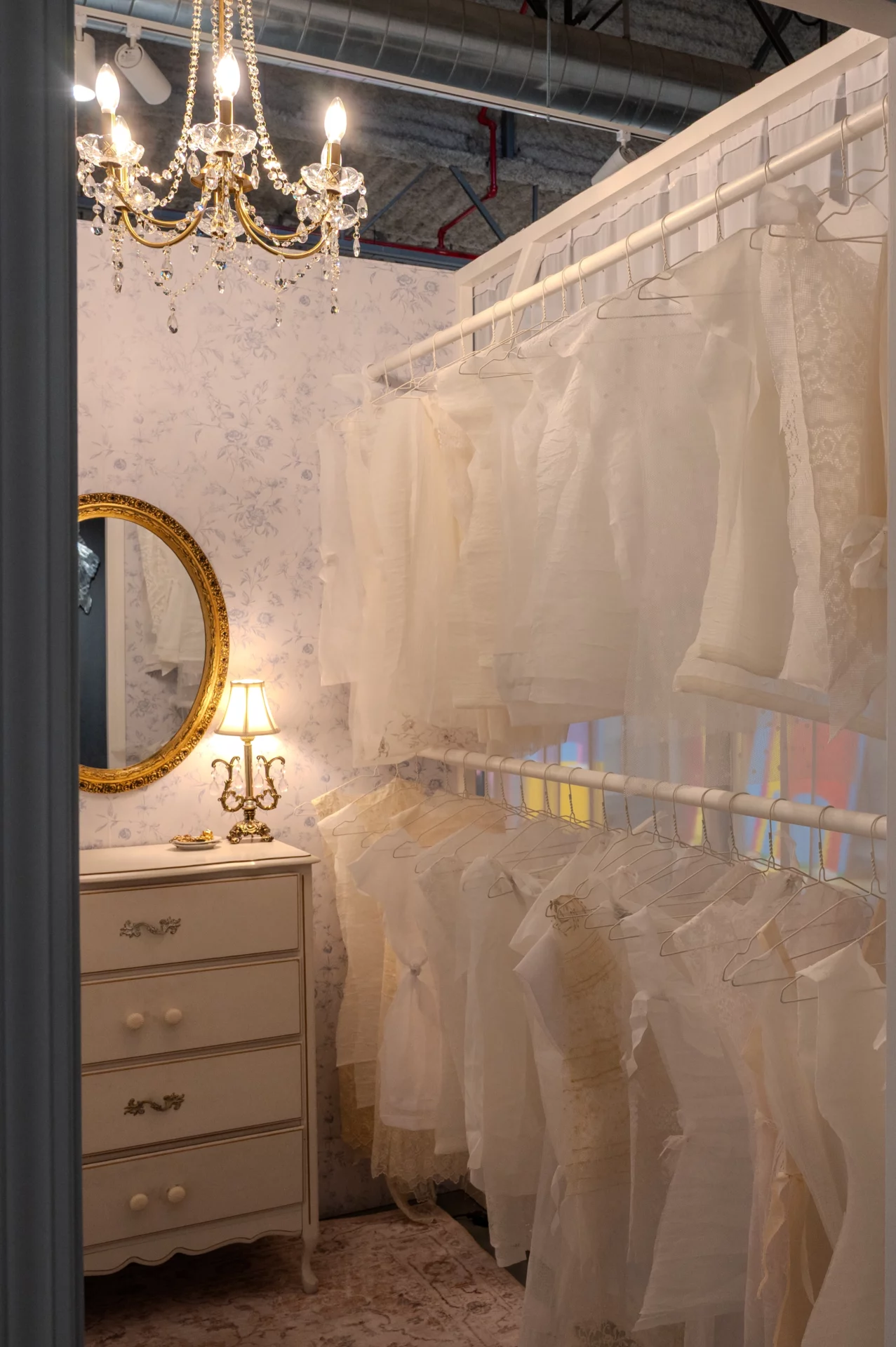
Averi Boerboom’s printmaking and installation practice centers on memory and nostalgia, rooted in vivid childhood experiences with her grandmother. As a child, she would explore her grandmother’s closet, draping scarves around her shoulders, layering jewelry over her small hands, and stepping into oversized heels. These sensory memories, filled with scent, texture, and presence, formed a deep connection that later shaped her understanding of her grandmother’s journey with Alzheimer’s disease.
Boerboom transforms personal recollections into layered prints and installations using lace, ribbon, buttons, and clothing patterns printed on evolon and Stonehenge paper. Through material cutouts and carefully composed arrangements, she echoes the structure and intimacy of her grandmother’s wardrobe. Neutral tones and delicate fabrics carry sentimental weight, evoking both closeness and absence.
By engaging with the intersection of remembering and forgetting, Boerboom’s work preserves fleeting moments, inviting viewers to reflect on the fragments of memory that endure over time.
Trinity Davis
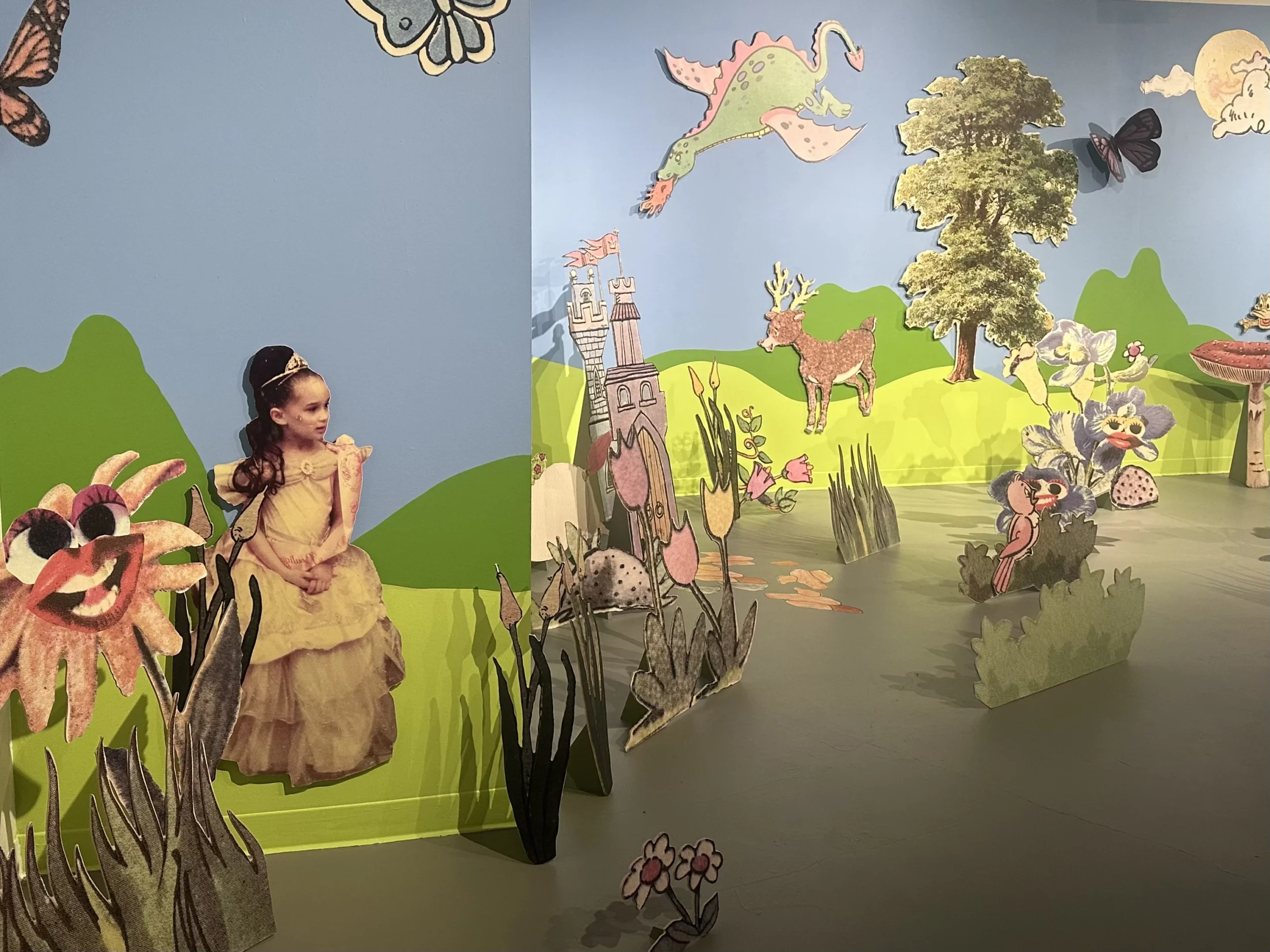
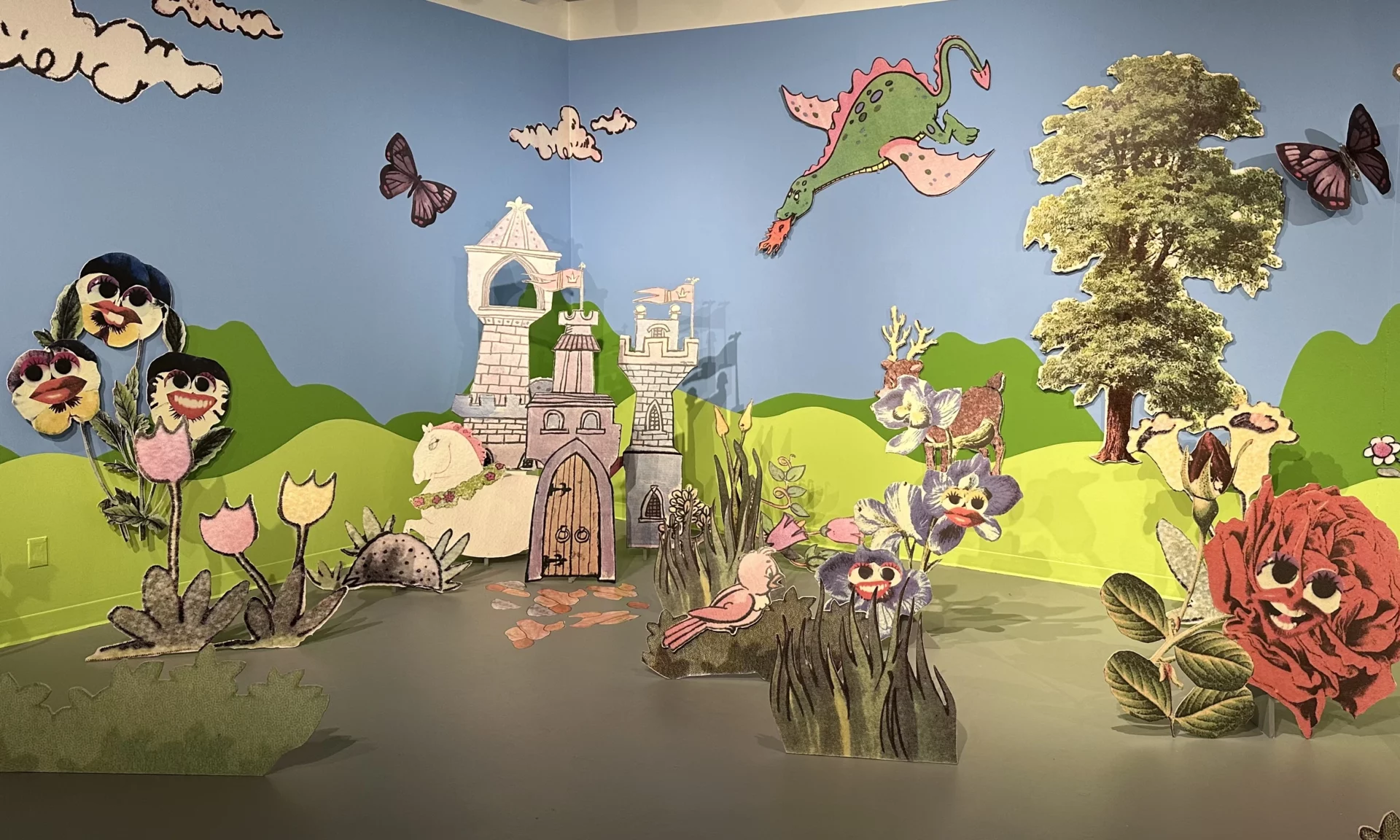
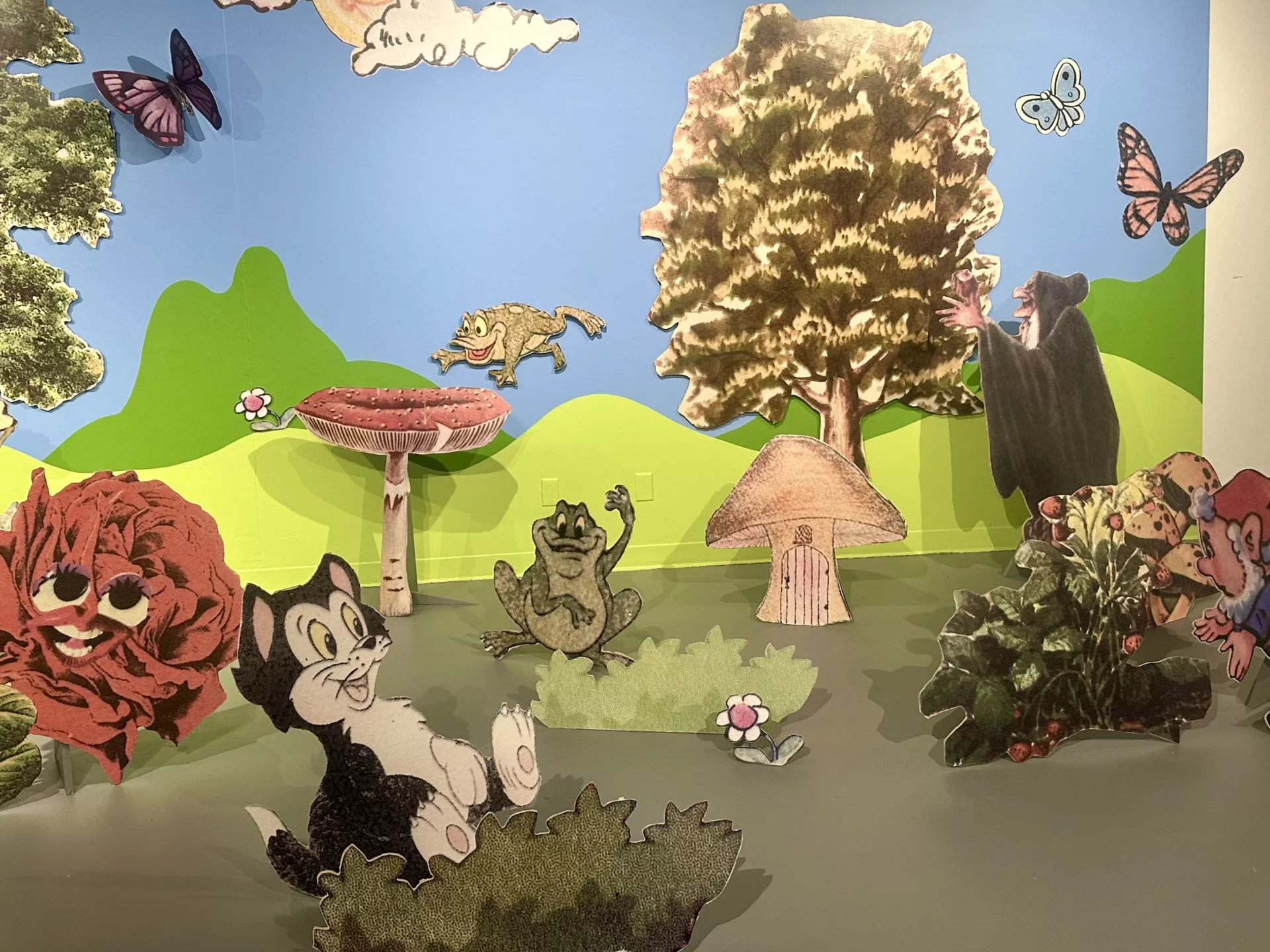
Trinity’s work explores themes of childlike wonder and unrestrained creativity-qualities that shaped her earliest memories. As a child, imagination came naturally as she built worlds with toys and immersed herself in the colour and charm of illustrated books. Over time, however, that sense of wonder faded as adulthood introduced responsibilities, expectations, and the pressures of sustaining a future. Celebrations once filled with excitement, such as holidays and birthdays, gradually became quieter, often overshadowed by everyday concerns.
Through her printmaking practice, Trinity confronts this loss and works to restore a sense of awe. Her prints are multilayered collaged compositions that distort, reassemble, and enlarge imagery drawn from childhood books and illustrations. Small images are amplified into monumental forms, transforming familiar visuals into immersive experiences.
By enlarging halftones, dots, and printed textures, Trinity reveals the structure behind these imagined worlds, inviting viewers to reconnect with nostalgia, curiosity, and wonder.
Rain Doody
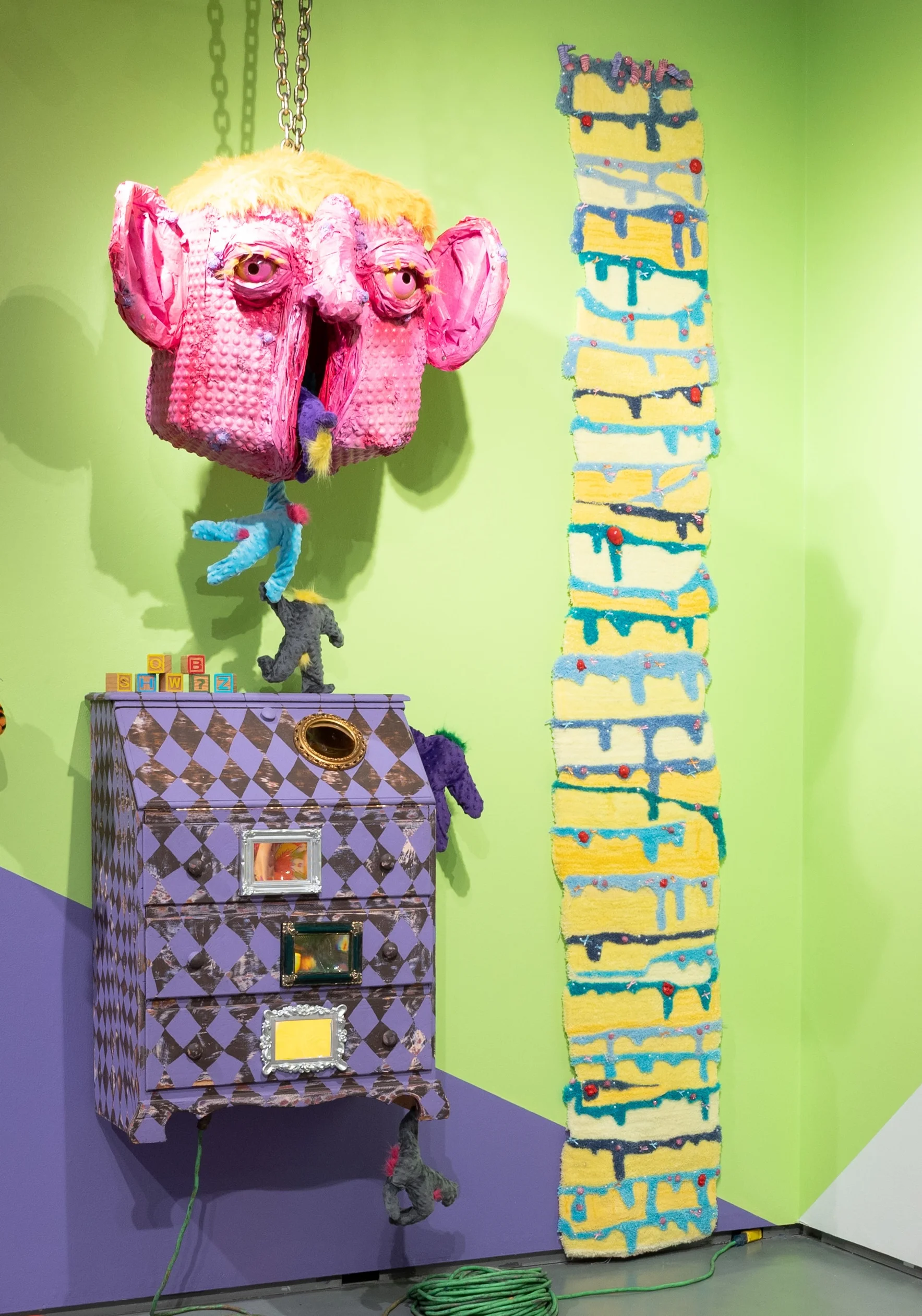
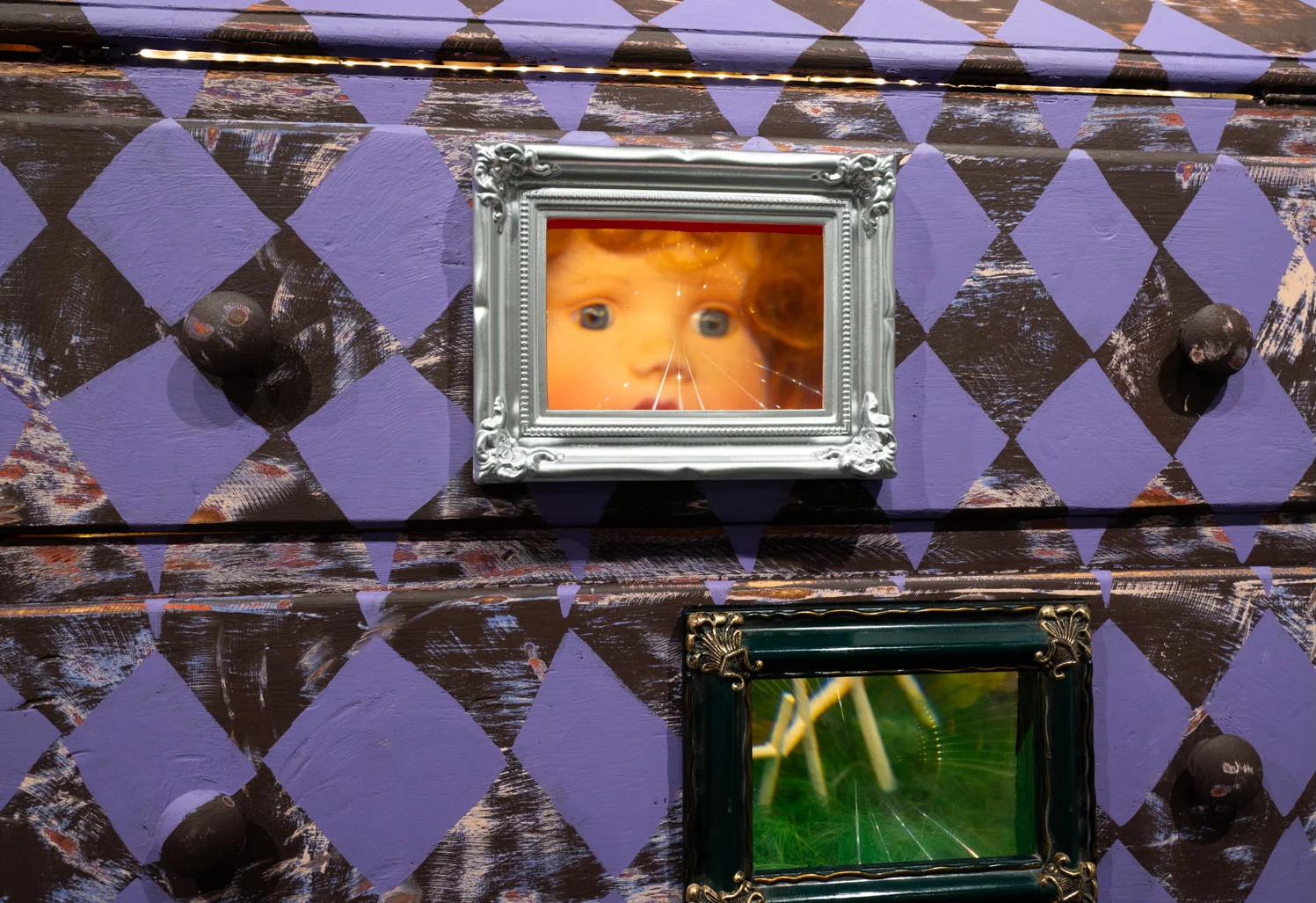
Rain Doody is a multimedia artist working mainly through sculpture and caricature. In his work, he experiments through usage of raw vs polished materials, and toes the line of the jank. He draws inspiration from acne scars, mole hairs, folds and shades of skin, and the muppets.
“My vision is inter dimensional beings have noticed the ridiculosity in humans self-inflicted suppression. Why must everything be tiny, smooth, and minimalist? Humans are losing their most interesting parts; so they’ve infiltrated this plane to shock us back into our factory settings.”
Growing up queer in the 2000s, Rain explores the effect of social media on self expression and perception. He embraces the strange and unusual through texture and colour, and creates ‘perfectly janky’ works to reflect the unique delight in imperfection.
Carly Johnson
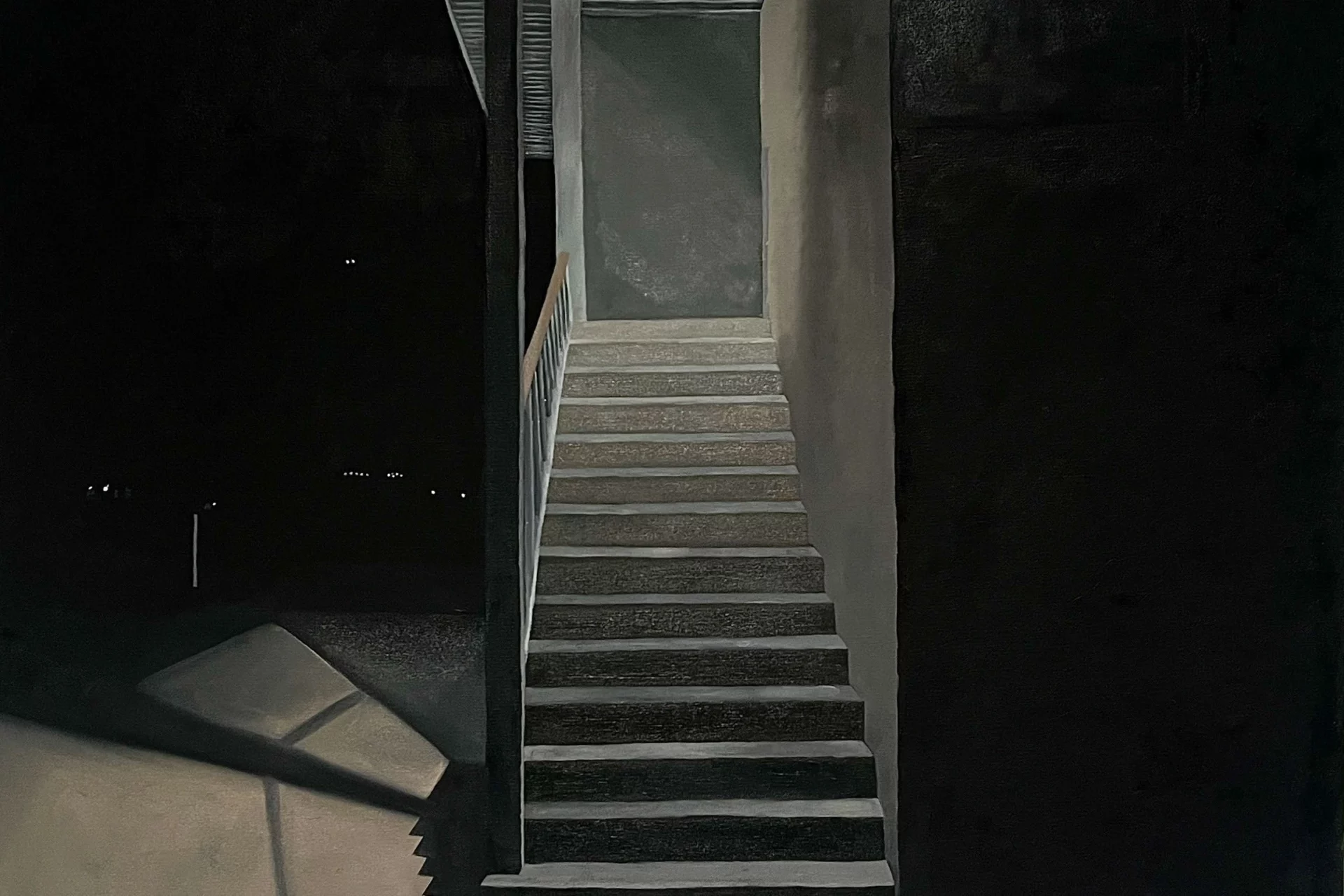
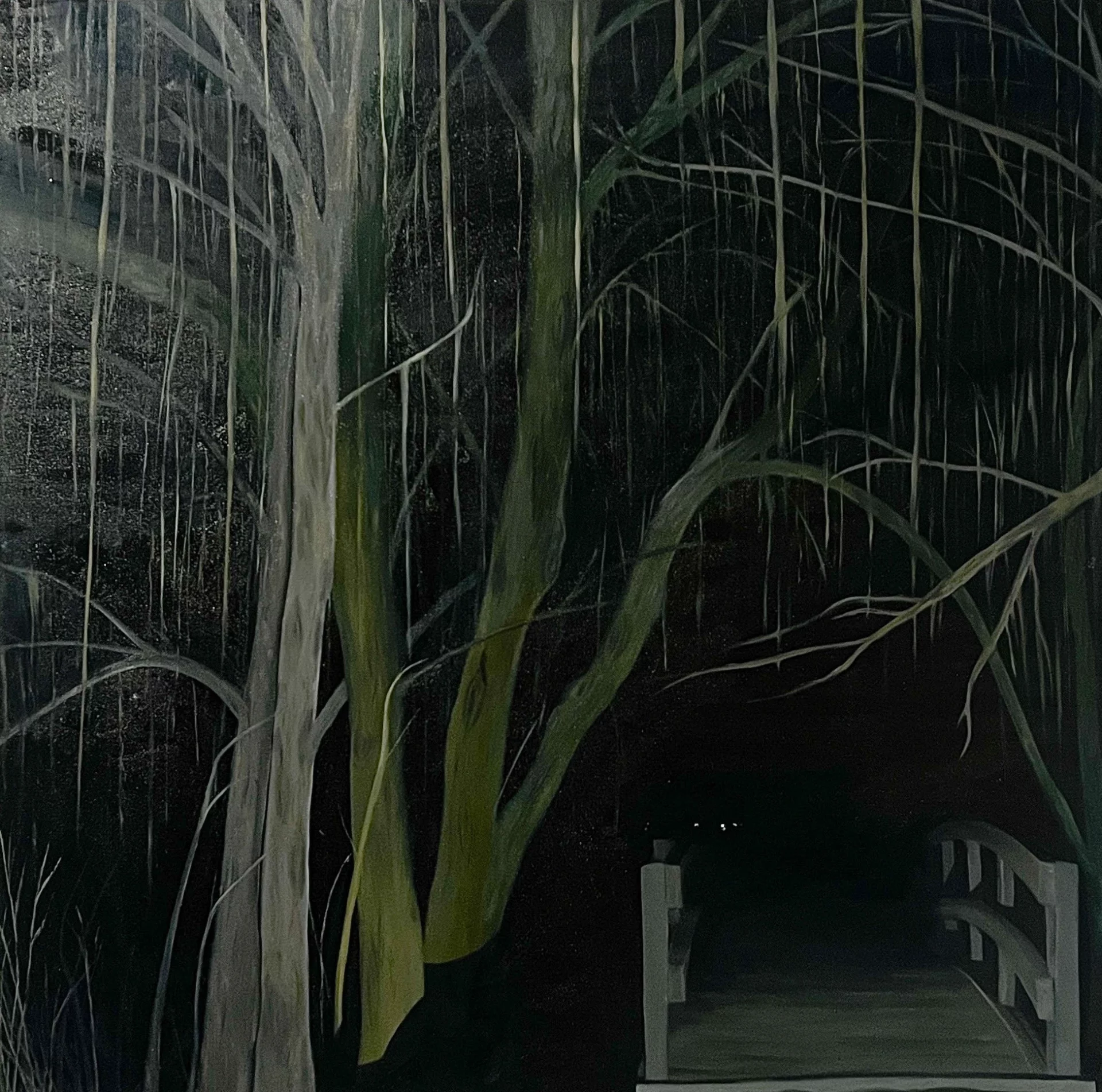
Carly Johnson’s body of work stems from an interest in the theme of the contrast of lighting in night scenes, and a fear of what lurks in the dark; physically and metaphorically. She decided to reach out of her comfort zone to create a body of work that specifically incorporates dark lighting and themes of discomfort, encompassing the uncertainty of the unknown through oil paints on canvas. The locations painted are all places that hold meaning to her, whether it is simply close to her childhood home, or local places that hold a deeper, significant impact.
Carly works by capturing her own reference images, typically shot around the Rutland community. Having a personal connection to the photo and painting itself helps to establish a sense of nostalgia for her. She hopes to explore ways in which she can further the narrative of something potentially lurking, and a feeling of mystery in her paintings.
Clifford Jasper Ozee
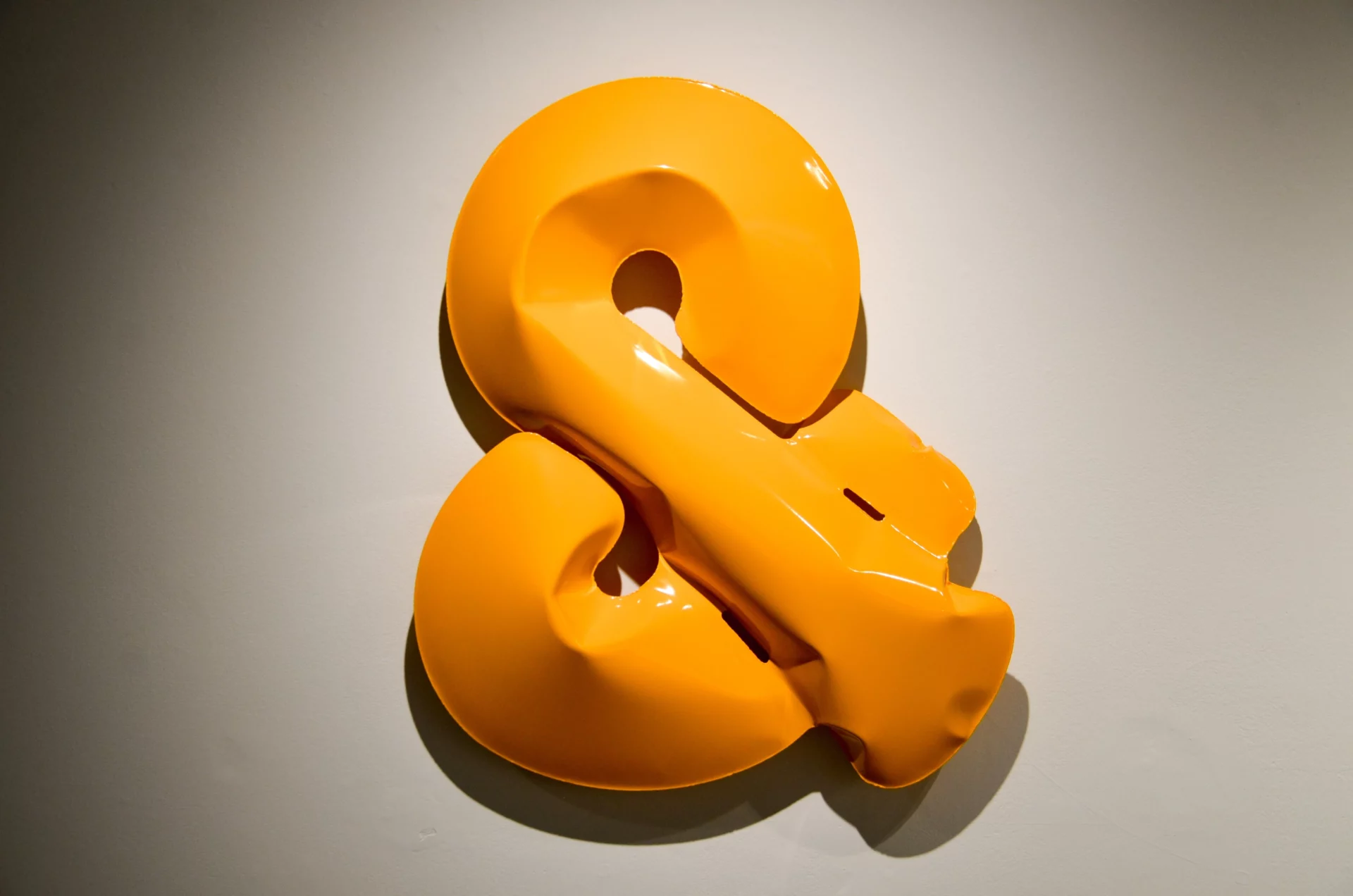
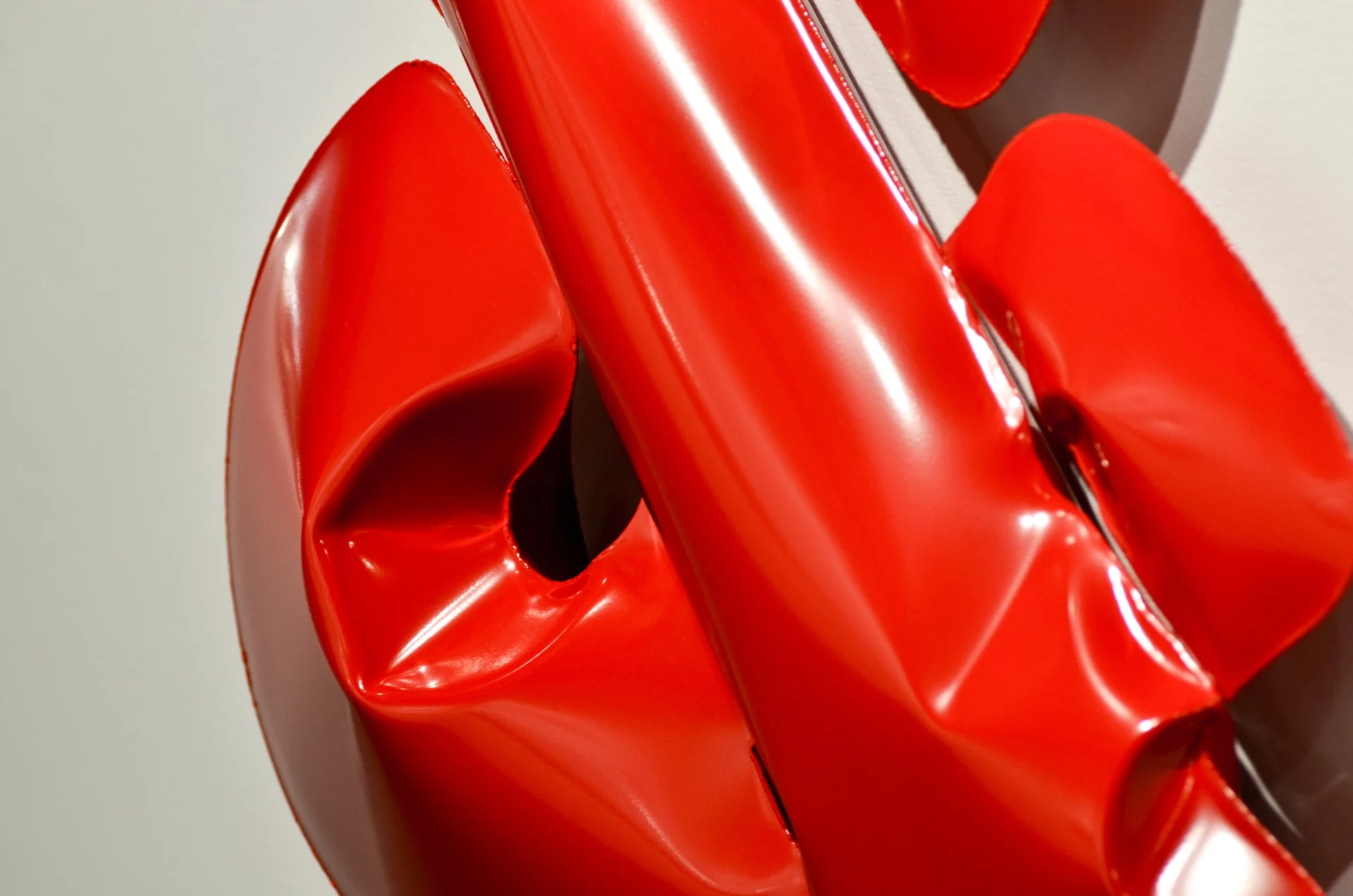
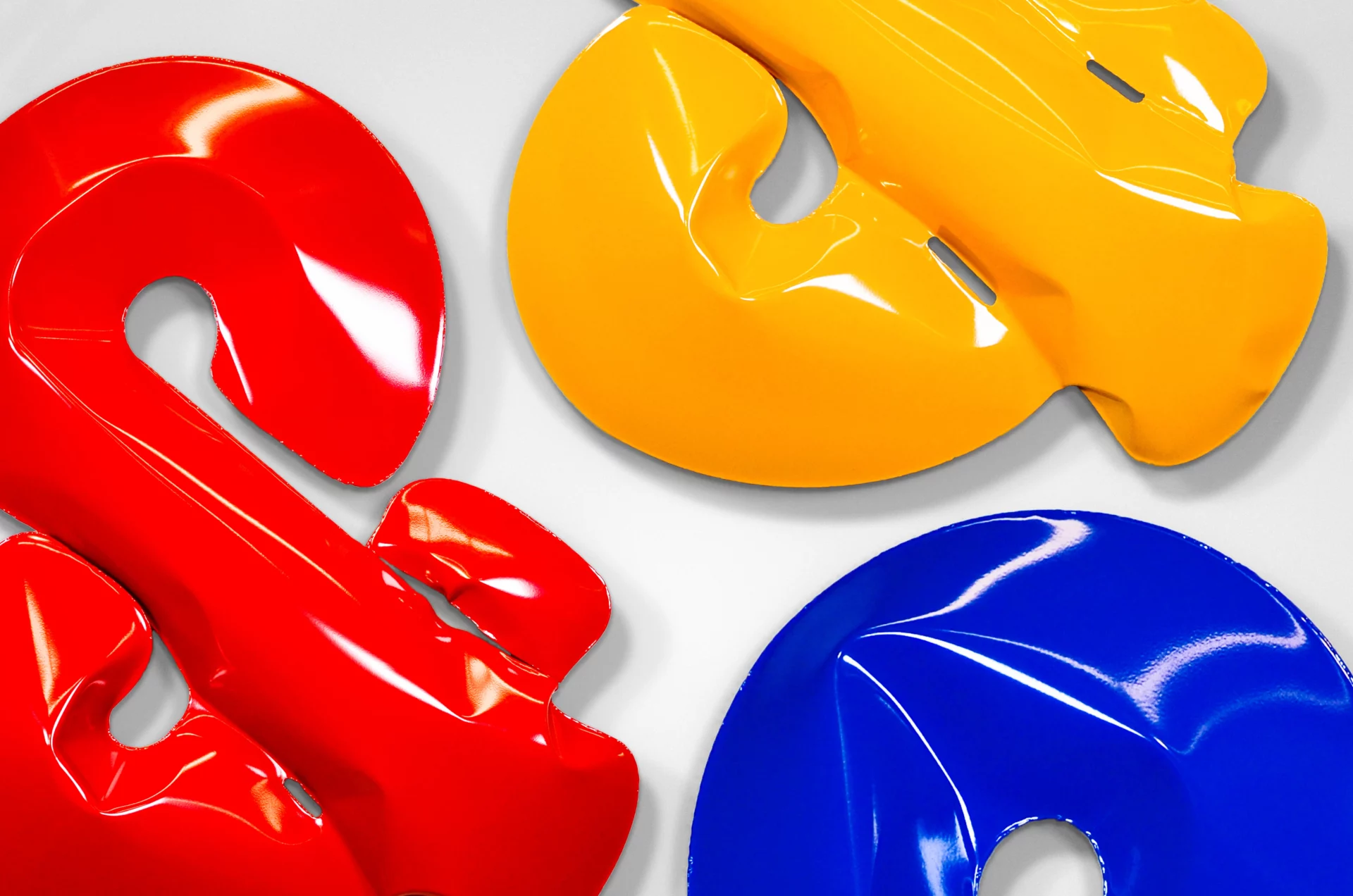
Clifford Ozee is a sculptor whose work centers on the fabrication and transformation of steel. His practice is built through hands on experimentation and a close engagement with the physical behavior of the material. Using welding, plasma-cutting, and hydroforming, he pushes steel beyond what can be shaped by hand alone, learning its limits through repeated trials of pressure, heat, and force.
Ozee’s current work focuses on hydroformed ampersands, the
“and” symbol. Each form is carefully fabricated and finished through mirror polished stainless steel and powder coating in bright primary colors. The work emphasizes precision and craftsmanship while acknowledging the subtle distortions created by pressure.
Through disciplined fabrication and repetition, Ozee develops forms that reveal both the strength and vulnerability of steel. Each sculpture reflects a commitment to process, technical skill, and refinement within a demanding material.
Stevie Poling
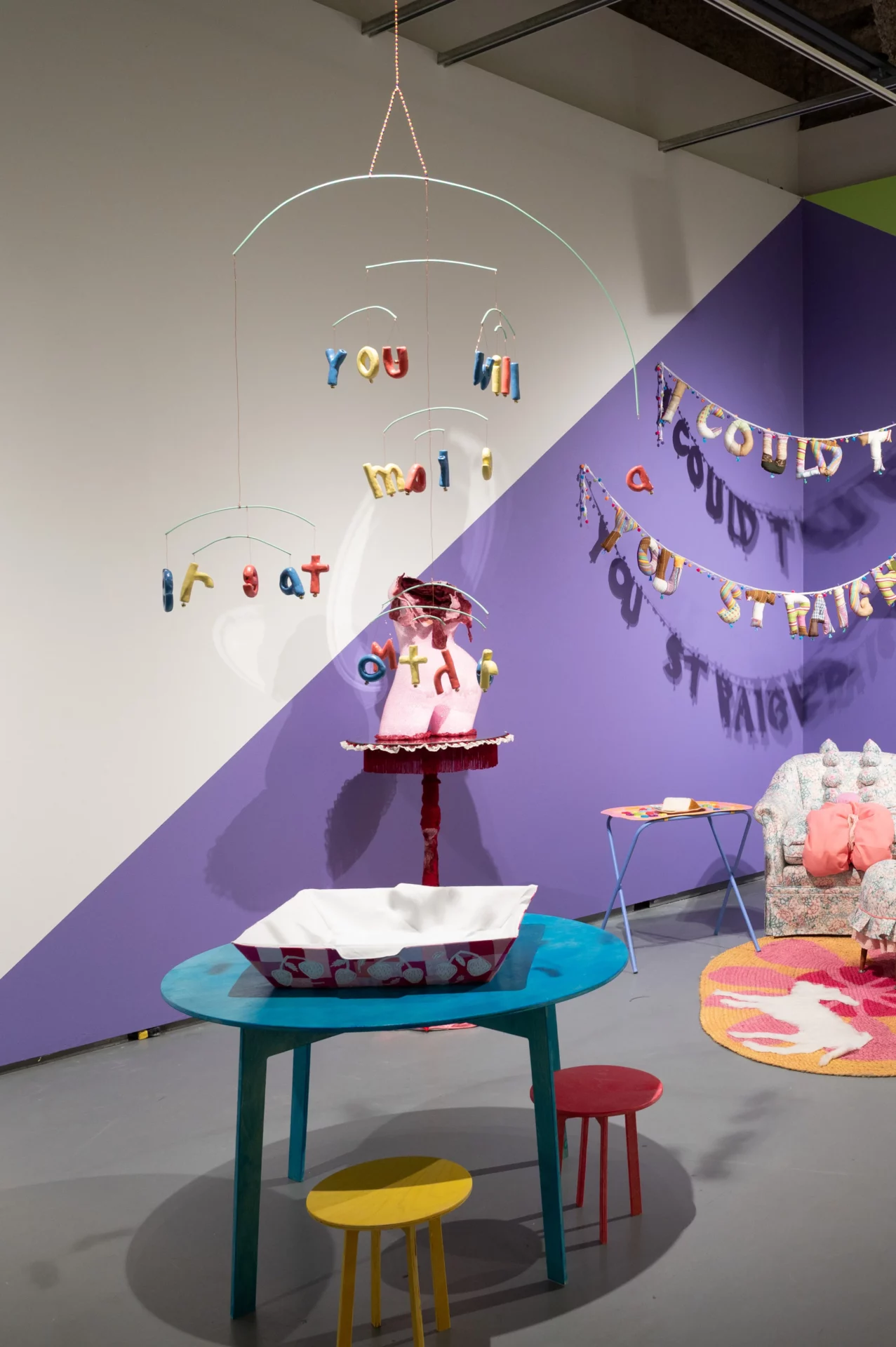
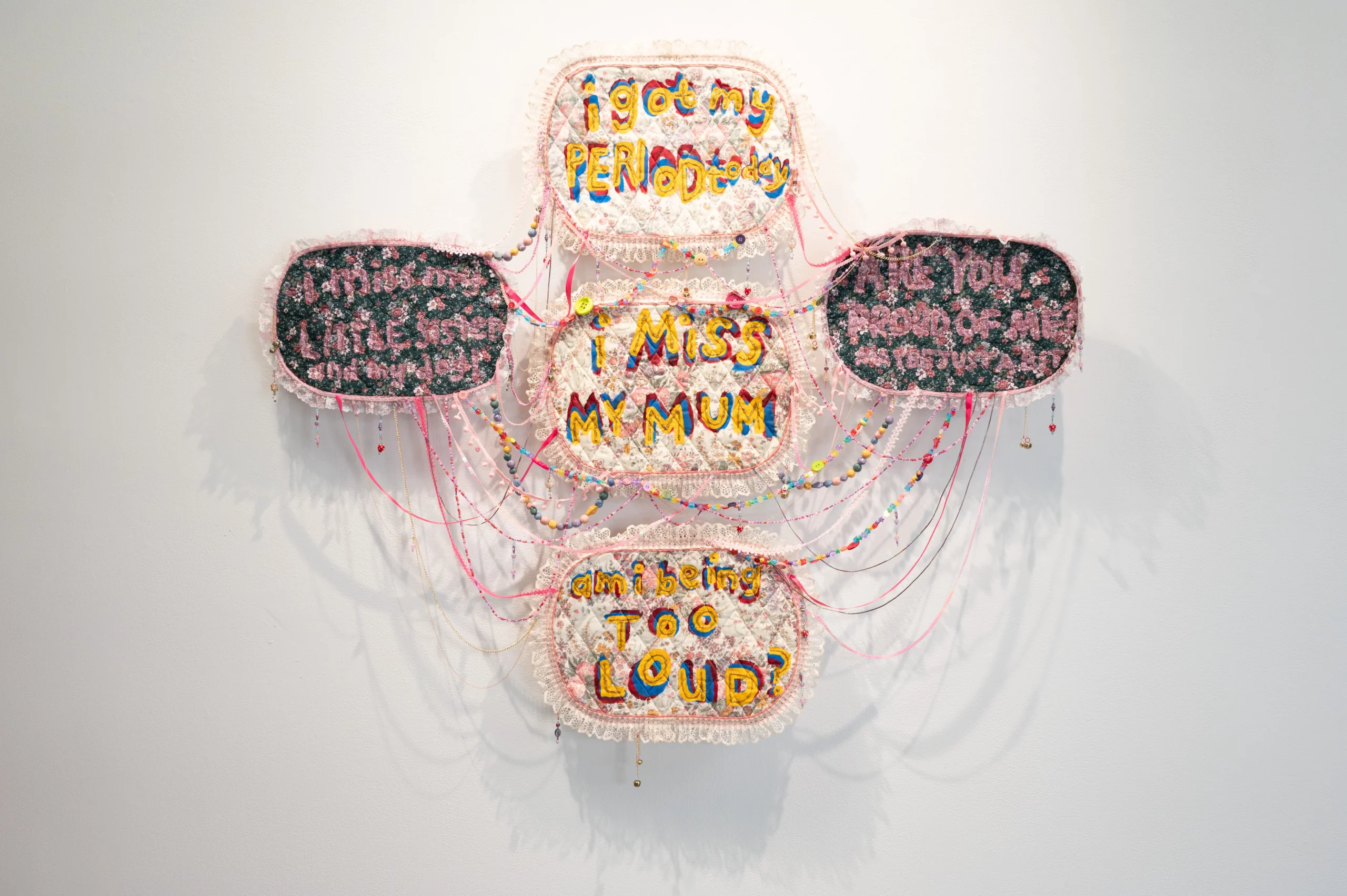
Stevie Poling is a queer multimedia artist working primarily with fibre and textile materials. She was born in the Kootenays and grew up in Melbourne, Australia. Stevie practices textile manipulation through an interdisciplinary feminist and queer lens, viewing the medium as an “inherently, unavoidably female and/or queer practice”. The connections made within sewing communities is manifested in the way fibres are woven and tangled together to form a garment or artwork.
She is inspired by her Mum, Samantha, who is a quietly counter-cultural feminist, an antique collector, and photographic artist. Samantha’s love of history and oddities found its way inherently interwoven into Stevie’s practice, visualised in her maximalist exploration of themes of domesticity and patriarchal expectations and, further, the Abject (Julia Kristeva) and embodiment. Stevie’s work aims to evoke a playtul sense of scale and gesture while counterbalancing its aesthetic with dichotomous feminist and queer discourse.
Maya Taki
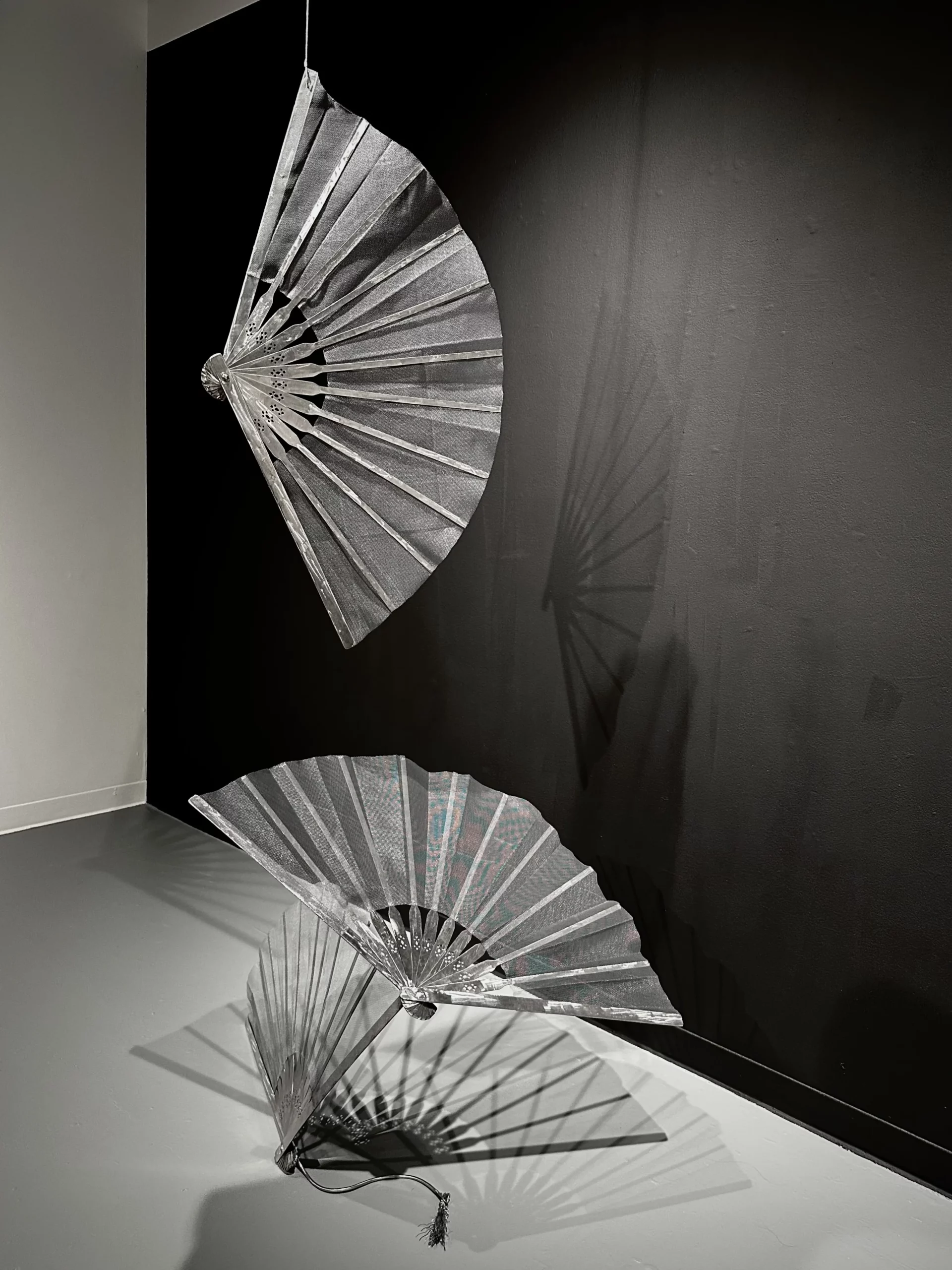
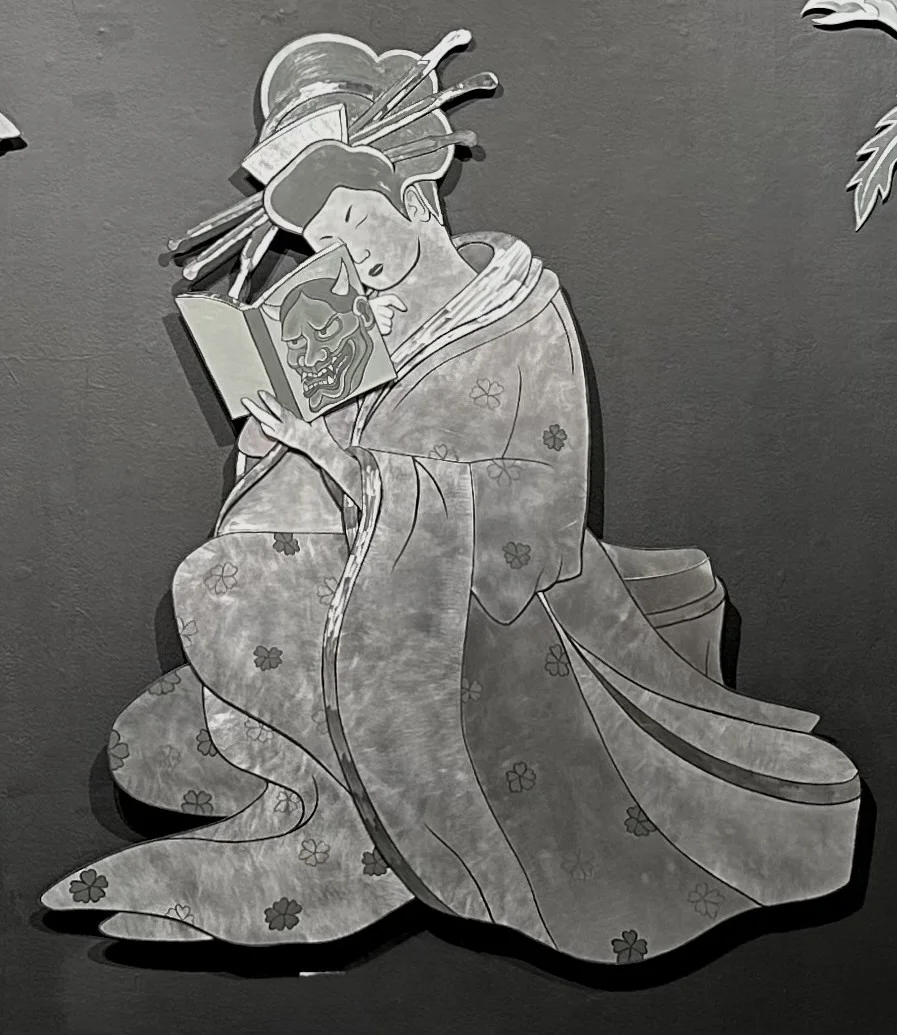
Maya Taki is a sculptor and painter who works primarily in oil paint and steel. Her work explores iconic Japanese imagery popular in tattooing.
Working with designs that she creates digitally, she transforms them to large steel cutouts with several layers that she uses as painting supports. Blending sculptural language with painting, she works across mediums to merge her interests together. A recurring theme in Maya’s work is identity, and the tensions that come along with being from a mixed heritage. Combining traditional styles and ways of making art with a contemporary lens has been a way for her to learn more about her ancestry while also including a perspective as someone who grew up and currently lives in Canada.